|
||
Chinese EtiquetteChinese etiquette - How to behave with the Chinese.Chinese manners are different. Their acceptable behaviour may come across as overly practical and hospitable. But you have to love them for it! Knowledge of some Chinese business or dining etiquette would help if you are going to any area with chinese people. This page is written for the general Chinese culture, which may not be limited to China-only communities. 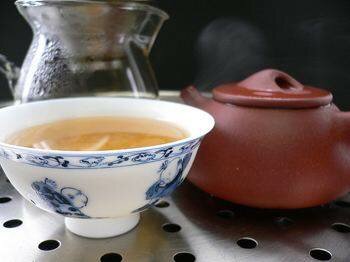
http://www.flickr.com/photos/yomi955/ / CC BY 2.0
Chinese EtiquetteChinese Dining EtiquetteThe first and most important Chinese etiquette to know is Chinese dining etiquette. Why? Because food is very important to them. The Chinese are one of the world's most adventurous about food. (The Japanese are serious contenders though.) Most Chinese socialize during meals. Dinners are the highlight of Chinese families. Every celebration or festivity is centered around food. 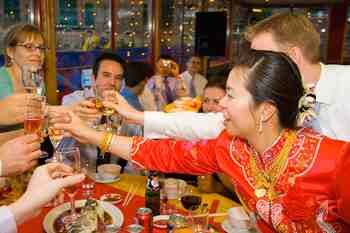
http://www.flickr.com/photos/nahtanoj/ / CC BY 2.0
Food are shared from communal plates set in the middle of a big round table. You'll either use serving spoons or your chopsticks, whichever is provided to pick the foods to be eaten from the center of the table with your bowl of rice. Good Chinese Table Manners: Before you eat, all should be seated and wait to start. The children or the youngest of the table generally show their respect and show good Chinese etiquette by 'asking their elders to eat'. They may say, "Grandfather, grandmother, please eat (start)," and followed by, "Mom, Dad, please eat". Then the elders will smile and indicate to everyone by slightly raising his chopsticks, "Everybody, eat!" And that's when the meal starts.  A Chinese dinner is very festive. Fine dining Chinese restaurants are not like your other fine dining restaurants where the quieter it is, the more refined and superb the food is expected to be. In large expensive world-renown restaurants, you'll still find the festive (read noisy) table full of laughter, sound, chatter by the Chinese people in the restaurant. They let go and let loose sometimes. (Which explains very noisy Chinese wedding dinners and more so if there is alcohol). This is acceptable Chinese etiquette. See more of Chinese Dining Etiquette Chinese EtiquetteWhen It Comes To Who Picks Up The TabCan Be Applied As Chinese Business EtiquetteIn the most genteel Chinese society, there is no such thing as "going Dutch". To go "Dutch" is considered bad etiquette. If you are invited to dinner, your dinner will usually be paid for by the host. That is what I really like that about the Chinese manners and the Chinese culture. They show hospitality to the max and I can say they are the most hospitable people in the world. I find myself enjoying to repay the favour. Chinese dinners are usually large in numbers, and yet, the tab is usually picked up by one person. Often there is a "fighting to pay the bill" going on when the bill comes. In fact, if you are dining people who are familiar with Chinese etiquette, this happens all the time. This friendly 'bickering' or 'arguing' (in the most positive sense) over who pays the bill is considered VERY GOOD MANNERS, as bizarre as it may sound. Usually the host will win the 'fight', but as a guest, it's good to put up a struggle a little, even if it is for show. If there is no "fighting", your host family will not think you are rude, but this "wanting to pay the bill for everyone" is a show of appreciation and gratitude. Generally this does not apply if the person you are dining with is at least one to two generation older than you (10-20 years). It is understood that the person more senior usually picks up the tab. Even if it's just a few years of difference. I could never let my younger brother (younger by three years) pay for me, up to now. But of course, if you are the host, generally picking up the tab is good Chinese etiquette. Just the same if we are invited to dinner by our parents, no matter how old we are, the dinner will be paid by our parents. Beware though, there is an unspoken rule as 'social debt' in Chinese culture. If you are constantly being invited for dinner by the same people. YOU MUST repay the favour but asking them out to dinner and PICKING up the tab. If you don't, your invitations by the host will cease. This is 'paying for your guest' thing is especially important when it comes to business functions and business entertaining especially if you do business or network with the Chinese (or anyone from Chinese culture). If you are seeing a client, you'll have to pick up the tab. Chinese EtiquetteGreetings the ChineseGenerally, people say hello and ask you if you have eaten. "Hi how are you?", followed by, "Have you eaten?" Food is very important to a Chinese person or a person of Chinese culture. If you haven't eaten, they would make sure that you are fed first. Hugging or kissing on the cheek is not expected though some will oblige the more western influenced. Some Chinese who grew up in Anglo-Chinese cultures, will hug and kiss on the cheek like everyone else. Chinese EtiquetteBusiness Greetings the Chinese
Please continue to Chinese Etiquette Page Two You might also be interested in:
Thank you for reading 'Chinese Etiquette'!
Go back to Elegance at Work. Return from Chinese Etiquette to Elegant Woman Home Chinese manners, Chinese dining etiquette, Chinese business etiquette Leave a comment |
Before You ReadHello and welcome! This site is something like a personal journal - it is neither an authority on elegance nor a professional site. FAQ.Elegant LessonsPeriodically, I write about my latest discoveries about my study of elegance.Blog Button Click picture for code. BooksThe Elegant Woman - elegantwoman.org in a book
E-book Secrets of Elegance - 10 Basic Steps E-book Becoming a Woman of the Finest Class E-book
Elegantwoman.org
 Promote your Page too Twitter UpdatesThe Elegant Woman Advertising EnquiriesAdvertising Opportunities Advertisements keep the site free. It pays for the running and building costs of elegantwoman.org I have a monthly readership of 75,000 strong reading 200,000 pages and growing.Our words reveal our refinements; they tell the discerning listener of the company we have kept; they are the hallmarks of education and culture. - Dale Carnegie I recognize but one mental acquisition as a necessary part of the education of a lady or gentleman, namely, an accurate and refined use of the mother tongue. - Dr Charles W. Eliot |
|
|
|
||
| Return to top | ||